Commercial Roofing & Flat Roof Repair in New Hope MN
What New Hope's Industrial Corridor Requires from a Flat Roof System
Industrial Flat Roofs in New Hope Carry Demands That Standard Crews Don't Understand. The commercial and industrial building inventory in New Hope spans four decades of development — from the 1960s light manufacturing facilities in established industrial park zones to the retail and professional service buildings along major commercial corridors developed through the 1980s and 1990s. Flat and low-slope roofing systems dominate both property categories, and the flat roof environment here has characteristics that standard commercial roofing work does not always account for. Industrial and light manufacturing properties carry rooftop equipment concentrations that retail buildings do not — HVAC units, exhaust systems, process ventilation, and electrical infrastructure that collectively create penetration counts and structural load points requiring individual assessment before any membrane work is proposed. Each equipment curb is a potential flashing failure point. Each penetration through a membrane surface requires a properly integrated flashing boot — a condition that deteriorates differently on older systems depending on the original installation quality and maintenance history. The flat roof environment on New Hope's industrial park properties is also shaped by operational requirements that retail buildings don't share. Manufacturing and distribution facilities often cannot accommodate roof work during production hours, requiring phased installation planning that accounts for the building's operational schedule. A contractor without experience coordinating around industrial production schedules will underestimate this variable and create disruption that costs more than the roofing project itself.
Rooftop Load Conditions That Require System-Level Planning Before Installation
Roof replacement planning on New Hope's industrial building stock requires understanding of several variables that distinguish large commercial projects from standard residential or small retail work. Large roof spans — common on warehouse, manufacturing, and distribution buildings — require engineered wind uplift calculations and FM-classified system assemblies that meet Hennepin County's requirements for buildings in their wind exposure category. Mechanically attached membrane systems on these spans must be specified with attachment patterns that match the building's calculated uplift requirements, not standard residential installation spacing. Cold storage and manufacturing facilities present an additional variable: interior temperature differentials create vapor drive conditions that affect insulation specification and membrane system selection. A building maintaining specialized interior temperature ranges needs insulation layering and vapor control that a standard commercial reroof specification does not provide, and getting this wrong produces condensation problems within two to three years. New Hope's industrial properties from the 1960s and 1970s also carry original steel deck conditions that require inspection before new insulation and membrane installation. Corrosion, section gaps, and previous deck penetrations from removed equipment may require repair or supplemental decking before a new system can be properly installed. An accurate bid on this building vintage requires core sampling and deck inspection as pre-assessment steps — not assumptions made from a roof walk alone.
Industrial-Grade Assessment for New Hope's Commercial Stock
Assessment on New Hope's industrial and commercial properties starts with a building-specific evaluation that accounts for the variables unique to each facility. Infrared thermography identifies wet insulation extent beneath intact membrane surfaces on both flat industrial roofs and low-slope retail buildings. Core sampling confirms deck condition, existing insulation type and R-value, and the presence of previous repair layers that affect recover feasibility. On industrial buildings where rooftop equipment creates concentrated load points, the structural deck condition under those loads requires specific attention before any replacement scope is finalized. The assessment also documents all existing penetrations, equipment curbs, and drain configurations — generating a penetration inventory that becomes the flashing scope for any repair or replacement project. Industrial buildings in New Hope's established park zones frequently carry penetrations from equipment removed over the years, leaving patched or improperly sealed openings that are among the most common active leak sources on this building type. Wind uplift calculations specific to the building's height, exposure category, and roof zone are a required input for any mechanically attached membrane specification on New Hope's larger industrial buildings. These calculations determine attachment pattern requirements and FM or UL system classification — variables that a contractor without industrial project experience does not account for before specifying a system. Every assessment generates a written report with photographic documentation of all observed conditions, system-specific findings, and a clear scope recommendation with supporting data.
Large-Span Membrane Systems with Engineered Attachment for Industrial Properties
Large-span flat roof systems on New Hope's industrial and warehouse buildings require membrane specifications that go beyond standard commercial parameters. Mechanically attached TPO is the current standard on new and replacement industrial roofs for its heat-welded seam integrity, wind uplift performance across large roof spans, and compatibility with Minnesota Energy Code insulation requirements. EPDM remains a viable option on end-of-life reroofs where the existing substrate suits EPDM installation and the building's operational conditions favor its performance characteristics. FM-classified system assemblies are required on commercial and industrial buildings in Hennepin County's wind exposure zones. Every industrial roof installation specifies a system assembly carrying the FM Global or UL classification required for the building's specific uplift calculations — a variable that contractors primarily experienced in residential work regularly underspecify on commercial and industrial projects. Phased installation planning is available for New Hope manufacturing and distribution facilities where operational continuity cannot be interrupted during roof replacement. Project scheduling that works around production hours, shift changes, and facility-specific access requirements is built into the scope from the start. Hennepin County building permits, final city inspection, and manufacturer warranty registration are managed through project completion, producing a complete documentation package for the building's permanent records and insurance carrier requirements.
Maintenance Programs Built Around Industrial Operational Requirements
Maintenance programs on New Hope's industrial and commercial properties are structured around two principles: matching visit timing to actual seasonal damage accumulation patterns, and ensuring repairs identified during visits are completed before the next weather event arrives. Spring visits after snowmelt address the conditions Minnesota winters produce on commercial and industrial flat roofs: freeze-thaw seam separations at membrane laps, drain blockages from debris and sediment accumulation, flashing separation at penetrations where thermal cycling has worked adhesive bonds loose, and equipment curb seal failures at active HVAC and exhaust points. Fall visits before the freeze season confirm the system is sealed and drainage is clear — identifying conditions that would allow water infiltration to expand through freeze-thaw cycling rather than remaining as minor surface conditions. Industrial buildings with heavy rooftop HVAC and process equipment benefit from focused penetration inspections targeting equipment curb seals and mechanical penetration flashings, which experience more stress from vibration and thermal cycling than field membrane areas. Portfolio maintenance programs for New Hope property management companies or building owners managing multiple commercial or industrial properties consolidate scheduling, reporting, and documentation across all buildings — simplifying insurance carrier compliance and ownership record maintenance. Written condition reports after every visit provide current roof status documentation for each property and support capital planning decisions.
Comprehensive Commercial Roofing Services in Brooklyn Park
Tailored to Your Needs
We specialize in the full spectrum of commercial flat roof systems and maintenance services for Brooklyn Park's industrial, warehouse, retail, and multi-family building stock. Every service is performed by commercial-trained crews with Hennepin County permit experience and manufacturer system certification.
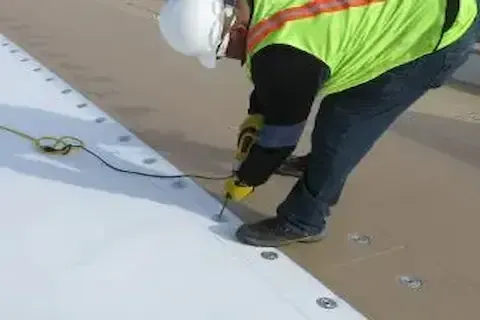
TPO roofing delivers heat-welded seam integrity and Minnesota climate performance for Brooklyn Park's commercial and industrial properties.
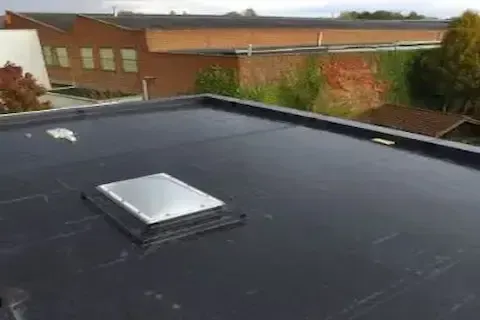
EPDM's proven durability through Minnesota's freeze-thaw cycles makes it the trusted choice for Brooklyn Park's older industrial and warehouse buildings.
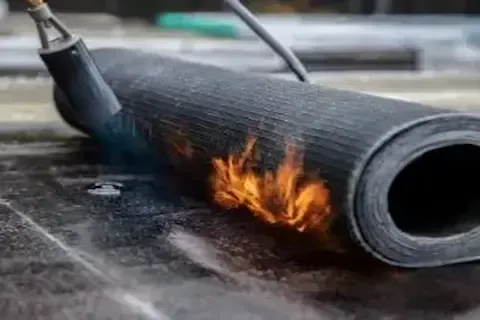
Modified bitumen's multi-ply redundancy and cold-weather SBS flexibility make it a durable choice for Brooklyn Park's aging commercial buildings.
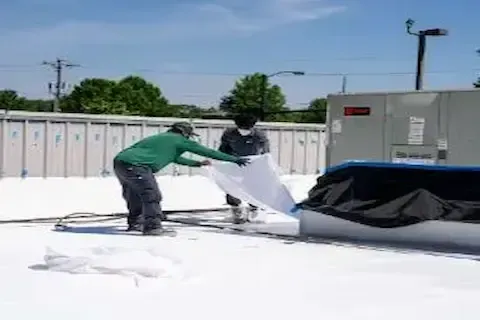
Fast, documented commercial roof repair for Brooklyn Park property managers - from emergency leak response to scheduled seam and flashing restoration.
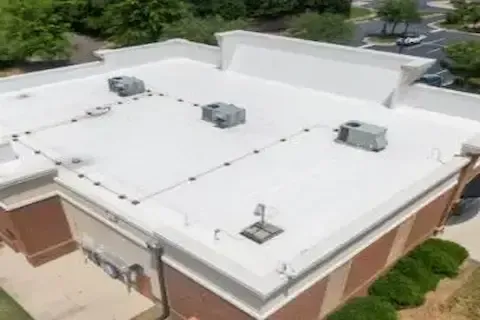
Full commercial roof replacement for Brooklyn Park buildings - from initial core sampling through Hennepin County permit closeout.
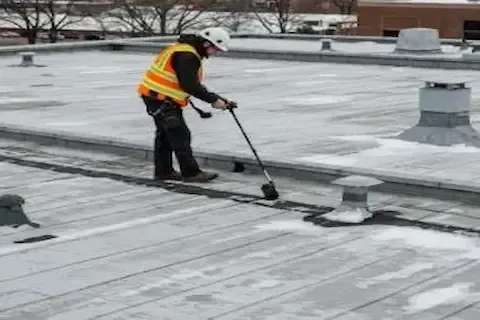
Detailed commercial roof inspections with written reports and infrared thermography for Brooklyn Park property managers, HOA boards, and building owners.

Structured biannual maintenance programs that protect Brooklyn Park commercial roofs from Minnesota's freeze-thaw cycles and extend membrane life.
Silicone and acrylic restoration coatings that extend Brooklyn Park commercial roof life by 10-15 years at a fraction of full replacement cost.
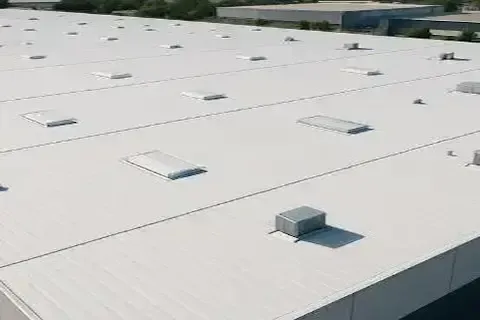
Specialized flat roof systems for Brooklyn Park's industrial and warehouse corridor - engineered for large spans, rooftop equipment loads, and Minnesota climate demands.
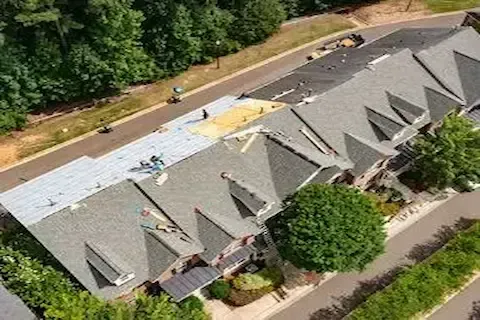
Roofing replacement and repair for Brooklyn Park HOA communities and multi-family properties with reserve fund documentation and phased project planning.
Frequently Asked Questions
Commercial Roofing can be complex, and we’re here to provide answers to common questions. Here are some frequently asked questions from our clients.
Frequently Asked Questions about Commercial Roofing Brooklyn Park MN
How much does commercial roofing cost in Brooklyn Park MN?
Commercial roofing costs in Brooklyn Park vary by system and building size. TPO membranes typically run $6-$10 per square foot installed, EPDM falls in a similar range, and modified bitumen averages $7-$12 depending on ply count and substrate condition. Warehouse and light industrial buildings along the Highway 169 corridor average 15,000-80,000 sq ft, so total project costs vary significantly. A scope-specific bid from a contractor experienced with Hennepin County commercial buildings gives you the most accurate number.
What is the best flat roof system for Minnesota's climate?
TPO is the most widely specified flat roof system for new commercial construction in Minnesota due to its heat-weldable seams, UV reflectivity, and freeze-thaw performance. EPDM remains a proven choice for large-format low-slope roofs and is common in Brooklyn Park's older industrial and warehouse stock from the 1980s and 1990s. The best system depends on your building type, existing substrate, R-value requirements, and whether you're reroofing over existing material. A licensed commercial contractor can assess your specific building.
How long does a commercial roof replacement take in Brooklyn Park?
A standard commercial reroof in Brooklyn Park takes 3-10 business days depending on building size, system type, and whether tear-off is required. Smaller buildings can be completed in 3-5 days. Warehouse and industrial facilities over 30,000 sq ft typically take 7-14 days. Minnesota's spring and fall windows are the busiest scheduling periods. Scheduling early in Q1 or Q3 gives better crew availability and avoids the peak summer repair season.
Does commercial reroofing require a Hennepin County permit?
Yes. Commercial roofing work in Brooklyn Park falls under Hennepin County building permit requirements when the scope involves a full replacement or structural deck changes. Applications for commercial reroofing are processed through Brooklyn Park's Community Development department. Your roofing contractor should pull the permit on your behalf - if they suggest skipping the permit, that is a red flag. Permitted work protects your building's certificate of occupancy and insurance coverage.
How often should a commercial roof be inspected in Minnesota?
Commercial roofs in Minnesota should be inspected at minimum twice per year - spring after the freeze-thaw season to identify membrane damage and drain blockages, and fall before winter to confirm the system is sealed and drainage is clear. Industrial and warehouse buildings with heavy HVAC equipment benefit from a third inspection after significant hail events. Brooklyn Park sits in Hennepin County's hail belt, which sees measurable hail events most years between April and July.
What causes most commercial roof failures in the Twin Cities?
The three most common causes of commercial roof failure in the Twin Cities are deferred maintenance on seams and flashings, inadequate drainage leading to standing water, and hail damage that goes uninspected until the membrane fails. Brooklyn Park's industrial and warehouse buildings are particularly vulnerable to drain blockage in spring when snowmelt exceeds drain capacity. Thermal cycling accelerates seam separation on any membrane system not regularly inspected. A preventive maintenance program catches all three failure modes before they require emergency response.
Need Commercial Roofing?
What Our Satisfied Clients Have to Say About Brooklyn Park Commercial Roofing
We pride ourselves on delivering great results and experiences for each client. Hear directly from home and business owners who’ve trusted us with their Commercial Roofing needs.

We manage a 40,000 sq ft warehouse on the Brooklyn Park industrial corridor and had been putting off the roof for two years. These guys did the core sampling, identified which sections actually needed replacement versus repair, and saved us about 30% relative to the full replacement bid we got from another contractor. Permits were pulled, work was done on schedule, and the inspection passed first visit. That's what I need from a roofing partner.
Greg Halverson
Our HOA board had been getting residential roofing contractors bidding on our townhome complex flat roofs - none of them understood the reserve fund documentation our lender required. This team put together a phased replacement plan across all six buildings with proper documentation for our Fannie Mae certification. Professional, organized, and they actually know HOA projects.
Sandra Nguyen
We signed up for the biannual maintenance program after our emergency repair bill hit $4,000 last spring. First inspection they found three drain issues and two seam separations we didn't know about - all fixed during the visit. No emergency calls since. The annual program cost is a fraction of what one bad spring used to cost us.
Tom Beckstrom
The Trusted Commercial Roofing Expert Near You
Ready to hear more about expert services at Brooklyn Park Commercial Roofing?
Contact us today to receive a detailed, no-obligation quote.

Brooklyn Park & the Twin Cities metro
Monday-Friday: 9am-5pm, Saturday: 11am-3pm
