Complete TPO Roofing Handbook for Brooklyn Park MN
Understanding TPO Roofing Fundamentals
Thermoplastic Polyolefin (TPO) roofing represents one of the most versatile and cost-effective solutions for commercial flat roofing applications in Brooklyn Park, Minnesota. This single-ply membrane system combines durability, energy efficiency, and straightforward installation procedures that make it particularly suitable for the region's challenging weather patterns. TPO membranes consist of ethylene-propylene rubber blended with various fillers and reinforcing materials, creating a flexible yet robust roofing surface that performs exceptionally well in Minnesota's temperature extremes.
The membrane's white reflective surface provides significant energy savings by reducing cooling costs during Brooklyn Park's warm summer months, while its flexibility prevents cracking during harsh winter conditions. Commercial property owners throughout the Minneapolis metro area have increasingly adopted TPO systems due to their proven track record and favorable lifecycle cost analysis compared to traditional built-up roofing or modified bitumen systems.
TPO Membrane Specifications and Thickness Selection
TPO membranes are manufactured in three standard thicknesses: 45 mil, 60 mil, and 80 mil, with each thickness serving specific applications based on building requirements, traffic expectations, and local climate considerations. For Brooklyn Park commercial installations, 60 mil membranes represent the most commonly specified thickness, providing an optimal balance between cost and performance for typical flat roof applications.
The 45 mil option works well for low-traffic roofs with minimal penetrations, while 80 mil membranes are reserved for high-traffic areas or roofs requiring enhanced puncture resistance. Membrane width options include 6-foot, 8-foot, 10-foot, and 12-foot rolls, with wider membranes reducing the number of seams required and potentially lowering installation labor costs.
Reinforcement options include polyester fabric or fiberglass scrim, with polyester providing superior elongation properties that accommodate building movement during Minnesota's freeze-thaw cycles. The reinforcement layer significantly improves tear resistance and dimensional stability compared to unreinforced membranes.
Installation Systems and Attachment Methods
TPO installation utilizes three primary attachment methods: fully adhered, mechanically attached, and ballasted systems. Each method offers distinct advantages depending on building structure, wind uplift requirements, and budget considerations specific to Brooklyn Park commercial properties.
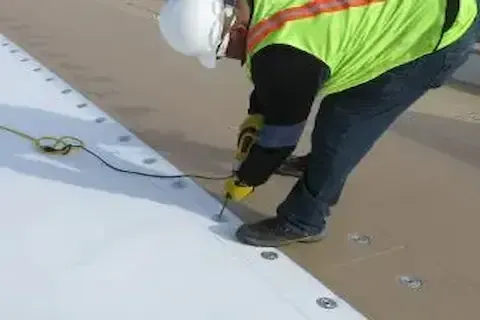
Mechanically attached systems dominate local installations due to their versatility and proven performance in high-wind conditions. This method involves securing the membrane to the roof deck using specially designed fasteners and plates, with fastening patterns determined by building height, roof area, and local wind loads. TPO Roofing installations typically require fasteners spaced 12 inches on center along membrane edges and seams, with field fastening patterns varying based on engineering specifications.
Fully adhered systems provide superior wind uplift resistance and eliminate fastener-related thermal bridging but require careful substrate preparation and precise adhesive application. Ballasted systems offer the lowest installation cost but require adequate structural capacity to support the additional weight of gravel or pavers.
Seam Welding Techniques and Quality Control
Hot-air welding creates the primary seam connections in TPO systems, producing a molecularly bonded joint that typically exceeds the membrane's base material strength. Proper welding requires maintaining consistent temperature, pressure, and travel speed while ensuring clean, dry membrane surfaces free from contamination.
Welding equipment includes hot-air guns with temperature controls ranging from 1000°F to 1200°F, silicone pressure rollers, and various nozzle configurations for different seam geometries. Successful welding depends on ambient temperature conditions, with cold weather requiring preheating procedures and wind protection to maintain consistent weld quality.
Quality control procedures mandate destructive testing of sample welds throughout the installation process. Field testing involves cutting one-inch-wide strips from completed seams and performing peel tests to verify proper adhesion. Acceptable welds exhibit fiber tear within the membrane rather than adhesive failure along the seam interface.
Flashing Details and Penetration Management
TPO flashing systems accommodate various roof penetrations including HVAC equipment, plumbing vents, electrical conduits, and structural elements. Standard flashing details utilize prefabricated components when possible, reducing field fabrication requirements and improving installation consistency.
Pipe penetrations typically employ two-piece flashing systems with flexible boots that conform to irregular surfaces while maintaining weathertight seals. Equipment curbs require custom-fabricated flashing that integrates with the primary membrane through welded connections, creating continuous waterproofing barriers around large penetrations.
Edge terminations vary based on parapet height and construction details, with fully adhered edge strips providing enhanced wind uplift resistance along roof perimeters. Proper flashing installation requires understanding thermal movement patterns and incorporating appropriate expansion joints to prevent membrane stress concentrations.
Insulation Integration and Energy Performance
TPO systems integrate with various insulation types including polyisocyanurate, expanded polystyrene, and extruded polystyrene boards. Insulation selection impacts both thermal performance and installation procedures, with some systems requiring specific fastener types or adhesive compatibility considerations.
Brooklyn Park's climate zone 6A designation requires commercial roof assemblies to meet or exceed R-25 thermal resistance values for code compliance. TPO membranes contribute minimal R-value, making proper insulation selection critical for energy code compliance and long-term operating cost control.
Thermal bridging through mechanical fasteners can reduce effective R-values by 10-15% compared to theoretical calculations, making precise fastening pattern design essential for meeting energy performance targets. Continuous insulation strategies help minimize thermal bridging effects while maintaining structural attachment requirements.
Maintenance Requirements and Inspection Protocols
TPO membrane maintenance involves regular inspection schedules, prompt repair of minor damages, and periodic cleaning to maintain reflective properties. the Brooklyn Park inspection manual provides detailed guidance for identifying common TPO issues including seam separation, membrane punctures, and flashing deterioration.
Recommended inspection frequency includes semi-annual visual surveys, post-storm damage assessments, and annual comprehensive evaluations by qualified roofing professionals. Early detection of minor issues prevents water infiltration and extends membrane service life significantly beyond basic warranty periods.
Cleaning procedures involve removing debris accumulation, clearing drainage systems, and addressing any biological growth that might compromise membrane performance. Proper maintenance documentation supports warranty claims and provides valuable performance data for future roofing decisions.
Lifecycle Cost Analysis and ROI Considerations
TPO systems typically provide 15-20 year service lives with proper installation and maintenance, making initial cost comparisons only one factor in total cost of ownership calculations. Energy savings from reflective membrane surfaces can offset installation premiums through reduced cooling costs, particularly for buildings with significant air conditioning loads.
Brooklyn Park commercial property owners should evaluate lifecycle costs including initial installation, periodic maintenance, energy savings, and eventual replacement costs when comparing roofing options. TPO systems generally offer favorable lifecycle economics compared to built-up roofing or EPDM alternatives while providing superior energy performance.
Warranty coverage varies among manufacturers but typically includes 15-20 year material warranties with optional extended coverage available. Installation workmanship warranties usually provide 2-10 year coverage depending on contractor qualifications and project specifications.
Code Compliance and Regulatory Requirements
Minnesota commercial building codes mandate specific performance requirements for roof assemblies including fire resistance, wind uplift capacity, and thermal performance standards. TPO membranes meet or exceed most code requirements when properly specified and installed according to manufacturer guidelines.
Wind uplift requirements depend on building height, roof area, and geographic location within Brooklyn Park's wind zone classifications. Mechanical attachment patterns must be engineered to resist calculated uplift forces with appropriate safety factors, typically requiring professional engineering analysis for buildings exceeding basic code limitations.
Fire resistance ratings depend on deck construction and insulation types, with most TPO assemblies achieving Class A fire ratings when installed over appropriate substrates. Local permitting requirements may specify additional testing or certification documentation beyond basic code compliance.
