Storm Damage Roof Repair in Brooklyn Park MN Buildings
When a severe storm rolls through the Twin Cities metro, Brooklyn Park commercial properties often take the brunt of it. Hail, high winds, and wind-driven debris can compromise a flat or low-slope roof quickly, and the damage is not always obvious from the ground. Understanding how storm damage affects commercial roofing systems, what to look for after an event, and how the documentation process works can make a significant difference in how smoothly your insurance claim is resolved and how fast your building is protected again.
How Storms Damage Commercial Roofs in Brooklyn Park
Commercial flat roofs face different threats than residential shingle roofs, and the failure modes are less visible. During a hail event, impact energy bruises membrane surfaces, fractures insulation boards beneath the membrane, and cracks roof edge metal. On a TPO or EPDM roof, hail bruising may not penetrate the membrane immediately, but the structural integrity of the insulation underneath is compromised, reducing thermal performance and accelerating long-term membrane fatigue.
High-wind events create uplift pressure along roof edges and at field seams. When edge metal is not properly fastened or has aged, wind can peel it back and introduce large volumes of water in a single storm. Wind-driven debris such as branches, metal fragments, or gravel from neighboring rooftops can puncture membranes directly, leaving entry points that may not be discovered until water shows up on interior ceilings days later.
Minnesota's weather patterns mean Brooklyn Park commercial buildings routinely face storms severe enough to cause this type of damage. The storm season runs roughly April through October, but late-season events in November can also deliver freezing rain and ice that cracks aging membranes around penetrations.
Post-Storm Inspection Priorities for Building Owners
After a significant storm, a professional roof inspection should happen within 48 to 72 hours. Insurers in Minnesota typically require documentation of damage tied to a specific weather event, and the window for establishing that connection is short. Waiting too long risks the damage being attributed to general wear and tear, which most commercial policies do not cover.
During a post-storm inspection, a qualified contractor looks for several specific indicators. On membrane surfaces, inspectors check for impact marks, bruising patterns consistent with hail size reported in the storm, and any visible punctures or tears. Roof edge metal and coping caps are examined for uplift, bending, or separation. Pipe boots, HVAC curbs, and skylight flashings are checked for displacement or cracking. Interior roof drains and scupper openings are inspected to confirm debris has not caused blocking that would allow ponding water to accumulate against damaged membrane edges.
Photographs taken at consistent angles, supplemented by measurements and written notes, form the documentation package that supports your claim. For Commercial Roof Repair work tied to insurance, this documentation is not optional. Adjusters reviewing claims remotely rely heavily on photo evidence and contractor reports to approve scope and pricing.
Hail Damage Specifics on Flat Commercial Roofs
Hail damage on commercial roofs is assessed differently than on asphalt shingles. Adjusters use hail size data from weather reporting services cross-referenced with on-site inspection findings. For TPO and EPDM membranes, functional damage is defined as impact that compromises waterproofing performance, not just surface appearance. Gravel-surfaced built-up roofing presents an additional challenge because the aggregate layer can mask significant membrane bruising underneath.
One misunderstood aspect of hail damage is that insulation compression below the membrane is considered a covered loss even when the membrane itself has not visibly cracked. Compressed insulation loses its R-value and can create irregular surface profiles that pool water. Building owners in Brooklyn Park who have experienced hail events larger than one inch in diameter should request an inspection even if no interior leaking has been reported yet.
Wind Damage Patterns and Edge Metal Failures
Wind uplift typically starts at corners and perimeter zones where pressure differentials are highest. Building codes for the Minneapolis metro area specify edge metal attachment rates and flashing details designed to resist these forces, but older buildings often have edge systems installed under earlier standards. When edge metal lifts, the membrane underneath is exposed to direct wind pressure and rain infiltration along an extended run, not just at a single point.
Repairs after wind events may involve resetting and re-fastening edge metal, re-welding or re-adhering lifted membrane sections, and replacing insulation that has absorbed water during the exposure period. In cases where large sections of edge have failed, decisions about patch versus replace decisions become directly relevant to the insurance claim scope and the long-term performance of the roof.
Temporary Repairs and Emergency Tarping
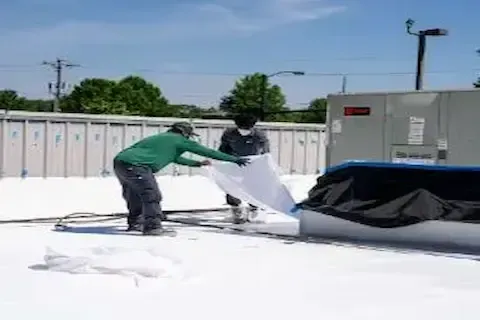
When storm damage is severe enough to allow active water entry, temporary protection should be installed immediately to prevent secondary damage to building contents, structural components, and insulation. Temporary repairs typically involve applying peel-and-stick membrane patches over punctures, installing temporary flashing at displaced edge metal, and in severe cases, installing roof tarps anchored to prevent additional wind displacement.
Documenting what was in place before temporary repairs is critical. Photograph original damage before covering it, and keep records of what materials were used and when temporary work was performed. Insurers expect temporary repairs to be made promptly to mitigate loss, but they also need to verify original storm damage conditions. A reputable contractor understands how to sequence and document this process properly.
Working With Insurers on Commercial Storm Claims in Brooklyn Park
Commercial storm claims involve separate adjusting processes from residential claims, and the amounts involved are typically larger. Having a contractor who understands how to present scope documentation, provide itemized labor and material estimates, and communicate directly with adjusters speeds up the approval process. Minnesota's construction climate also means material costs and labor rates reflect regional market conditions that adjusters from out-of-state firms may initially underestimate.
Brooklyn Park building owners benefit from working with local contractors who have an established track record on post-storm commercial projects in the area. Local contractors understand which weather events have affected the market, which suppliers can meet rapid turnaround requirements when demand spikes after major storms, and how Hennepin County permit processes apply to storm-related repair work. Choosing a contractor with this regional context reduces delays and supports a stronger, faster insurance resolution for your commercial property.
