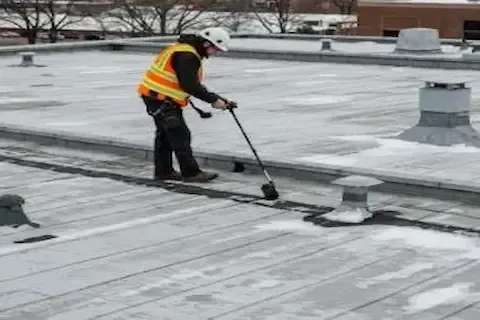
Brooklyn Park Roof Inspection Reports Decoded for Owners
Your Brooklyn Park commercial roof inspection report contains critical information that directly impacts your building's operational budget and long-term asset value. Understanding how to interpret defect ratings, photo documentation, and repair priority classifications helps you make informed decisions about maintenance timing and contractor selection in Minnesota's demanding climate.
Understanding Defect Rating Systems
Commercial roof inspection reports in Brooklyn Park typically use a standardized defect rating scale from 1 to 4, where each number corresponds to specific repair urgency and cost implications. A rating of 1 indicates minor issues requiring routine maintenance within the next 12 months, while a rating of 4 signals immediate safety concerns demanding emergency intervention within 30 days.
The rating system considers multiple factors including leak potential, structural impact, and code compliance issues. Inspectors evaluate membrane condition, flashing integrity, drainage functionality, and penetration sealing when assigning these numerical values. Your Commercial Roof Inspection report should clearly identify which building areas received each rating category.
Weather exposure significantly influences defect progression rates in Brooklyn Park's climate. Issues rated as 2 during fall inspections often deteriorate to rating 3 status after winter freeze-thaw cycles, making timing considerations essential for budget planning.
Photo Documentation Analysis
Professional inspection reports include comprehensive photo logs with GPS coordinates, timestamp data, and detailed annotations explaining observed conditions. Each photograph serves as legal documentation supporting repair recommendations and insurance claims if needed.
Quality photo documentation captures wide-angle context shots showing overall roof conditions, medium-range images highlighting specific problem areas, and close-up detail photographs documenting material deterioration or installation defects. Thermal imaging may supplement visible light photography to identify moisture intrusion patterns invisible to standard cameras.
Brooklyn Park building owners should verify that photo logs include cardinal direction references and permanent building landmarks for future comparison purposes. This documentation proves invaluable when tracking repair effectiveness and negotiating warranty claims with roofing contractors.
Repair Priority Classifications
Inspection reports organize identified defects into distinct priority tiers that guide maintenance scheduling and budget allocation strategies. Priority 1 items require immediate attention to prevent building damage or safety hazards, while Priority 4 items represent preventive maintenance opportunities that can be scheduled during favorable weather windows.
Priority 2 classifications typically include issues that should be addressed within the current fiscal year to prevent escalation into emergency situations. Priority 3 items can usually be deferred 12-18 months without significant risk, making them suitable for planned capital improvement projects.
Understanding these classifications helps Brooklyn Park property managers balance immediate safety requirements against long-term budget planning objectives. Consulting with the Brooklyn Park inspection manual provides additional context for interpreting priority assignments specific to local climate conditions.
Budget Impact Categories
Professional inspection reports translate technical findings into financial planning categories that align with typical commercial property budgeting cycles. Routine maintenance items generally fall within annual operating expense ranges, while major repairs may require capital expenditure approval processes.
Reports should distinguish between warranty-covered repairs, insurance-eligible damage, and owner-responsibility maintenance items. This classification directly affects cash flow planning and vendor selection strategies for Brooklyn Park commercial properties.
Emergency repair estimates help property managers understand potential unplanned expense exposure, while deferred maintenance projections support long-term capital planning initiatives. Accurate cost categorization enables informed decision-making about repair timing and financing options.
Common Report Interpretation Mistakes
Many Brooklyn Park building owners misinterpret inspection report language, leading to inappropriate repair prioritization or unnecessary emergency spending. Technical terminology like "ponding water" or "membrane blistering" carries specific implications that require professional interpretation.
Another frequent mistake involves confusing cosmetic issues with structural concerns. Surface discoloration rarely indicates immediate repair needs, while minor flashing gaps can lead to significant water damage if ignored through winter weather cycles.
Owners sometimes attempt to cherry-pick individual repairs from comprehensive recommendations, disrupting the integrated approach necessary for effective roof system maintenance. Professional inspectors design repair sequences that address interdependent issues systematically.
Brooklyn Park Climate Considerations
Minnesota's freeze-thaw cycles create unique interpretation challenges for commercial roof inspection reports. Issues that appear minor during summer inspections can become critical problems once winter weather begins expanding trapped moisture within roof assemblies.
Local building codes and weather exposure factors influence repair recommendations in ways that may not apply to inspection reports from other climate zones. Brooklyn Park's snow loading requirements and ice dam potential affect repair timing and material selection decisions.
Spring inspection reports often reveal winter damage that wasn't visible during fall evaluations, making seasonal timing an important factor in report interpretation and maintenance planning strategies.
Professional Consultation Value
While inspection reports provide detailed technical information, professional consultation helps translate findings into actionable maintenance strategies aligned with your specific building use and budget constraints. Experienced contractors can clarify technical language and explain repair methodology options.
Professional review also identifies opportunities to combine multiple repair items into cost-effective project packages, potentially reducing overall expenses through economies of scale and coordinated scheduling.
Regular professional consultation establishes maintenance relationships that prove valuable during emergency situations when immediate contractor response becomes essential for building protection.
