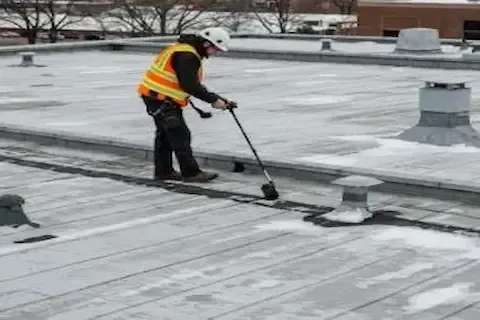
How Often Brooklyn Park Commercial Roofs Need Checks
Brooklyn Park commercial roofs should be inspected at least twice per year — once in spring after winter freeze-thaw cycles and once in fall before temperatures drop. After any significant storm event, a third inspection is recommended. This schedule satisfies most manufacturer warranty requirements, keeps lenders and insurers satisfied, and aligns with Minnesota commercial building maintenance standards. Flat and low-slope roofs common across Brooklyn Park's commercial corridors are especially vulnerable to ponding water and membrane stress, making routine checks essential for catching problems before they escalate into costly interior damage.
Why Does Inspection Frequency Matter for Brooklyn Park Commercial Roofs?
Brooklyn Park's climate creates unique stress cycles for commercial roofing systems. Winter temperatures routinely drop below zero, and the repeated freeze-thaw pattern through February and March forces water into small membrane cracks, expanding them with each cycle. By the time spring arrives, what started as a minor seam gap can become a significant leak point. A spring inspection catches that damage early, before summer rain turns it into a claim. A fall inspection prepares the roof for the next round of freeze stress. Skipping either window means compounding damage goes unnoticed until water appears on your ceiling or insulation values drop.
What Happens If You Inspect Only Once Per Year?
Annual inspections are better than none, but they leave a six-month blind spot. A roof that passes a fall inspection in October has no documented review during the most damaging season — Minnesota winter. By spring, ponding ice, ice dam pressure, and wind-driven debris can degrade membrane adhesion significantly. Without a spring check on record, you also have no documentation for warranty claims, and many manufacturers will deny coverage citing lack of maintenance evidence. Lenders with commercial mortgage requirements often specify semi-annual inspections explicitly; failing to meet that standard can trigger a loan covenant violation.
When Should You Add a Third Inspection Beyond the Twice-Yearly Schedule?
Severe weather events in the Brooklyn Park area — including hail storms, high-wind events exceeding 60 mph, and significant snowfall loading — warrant an unscheduled inspection within 72 hours when possible. Hail impact on TPO or EPDM membranes may not be visible from ground level but creates puncture points that collect water immediately. The Highway 169 and Zane Avenue commercial corridors have seen repeated storm damage claims in recent years that traced back to impacts that went uninspected for weeks. Early documentation also preserves your right to file an insurance claim; most commercial policies require prompt reporting of storm damage.
Do Manufacturer Warranties Dictate How Often You Inspect?
Yes, and the specific language matters. Most major membrane manufacturers — including those covering roofing systems on Brooklyn Park industrial parks and retail centers along Brookdale Drive — require documented semi-annual inspections to keep warranties valid. Some 20-year warranties escalate the requirement, mandating annual manufacturer-authorized inspections in addition to your own contractor checks. Review your warranty documents carefully. If you cannot produce signed inspection records for each required period, a warranty claim can be denied on procedural grounds regardless of whether the defect was a product failure. Our Commercial Roof Inspection service includes documentation formatted specifically to satisfy manufacturer warranty requirements.
What Does a Commercial Roof Inspection Actually Cover in Brooklyn Park?
A thorough inspection of a Brooklyn Park commercial roof typically includes membrane surface evaluation for blisters, cracks, and open seams; drainage system check for blocked drains and scuppers; flashing inspection at walls, curbs, and penetrations; interior attic or deck check for moisture infiltration signs; and documentation of any ponding areas. Rooftop HVAC equipment — common on the medical office and warehouse buildings along 85th Avenue — creates penetration points that require specific flashing attention. The inspector should photograph each deficiency and provide a prioritized repair list with estimated timelines. That written record is what satisfies both lenders and insurers.
How Do Local Code and Insurance Requirements Affect Your Inspection Schedule?
The City of Brooklyn Park follows Minnesota State Building Code requirements for commercial property maintenance. While the code does not prescribe a specific inspection interval by calendar date, it does require that building owners maintain roofs in watertight condition. If a code compliance issue is identified during a permit inspection or complaint investigation, documented routine maintenance — including inspection records — is your primary defense. Many commercial property insurance carriers active in the Brooklyn Park market include roof maintenance clauses that reference the twice-yearly standard. Failing to meet that standard can result in reduced claim payouts or policy non-renewal after a weather event.
Is There a Difference Between a Routine Check and a Full Inspection?
A routine check is a visual walk-through that a facilities manager can perform monthly — looking for obvious ponding, debris accumulation on drains, visible membrane damage, and interior leak signs. A full inspection requires a trained roofing contractor using probes, moisture meters, and infrared scanning in some cases. For Brooklyn Park commercial properties, the twice-yearly full inspections should be performed by a licensed contractor, while monthly checks by in-house staff fill the gap between. Understanding decoding inspection reports helps your team understand what each finding means and which repairs are urgent versus scheduled maintenance.
What Is the Most Cost-Effective Way to Manage Inspection Scheduling?
The most practical approach for most Brooklyn Park commercial property owners is a managed inspection agreement with a local roofing contractor that automatically schedules spring and fall visits, provides written reports after each visit, and includes a storm-response protocol for unscheduled checks after significant weather events. This removes the administrative burden of tracking inspection dates, ensures warranty compliance documentation stays current, and gives you a consistent record for lender and insurer requests. Properties on annual maintenance agreements also typically receive priority scheduling for repairs, which matters when late fall repair windows in Brooklyn Park are compressed by early freeze dates.
