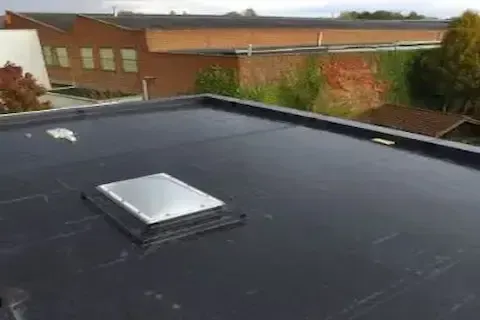
EPDM Roof Lifespan in Brooklyn Park MN Cold Climate
EPDM roofing in Brooklyn Park, MN typically lasts 25 to 35 years when properly installed and maintained. Cold climate performance depends heavily on installation method — ballasted systems handle freeze-thaw cycling better than fully adhered membranes in many cases. Minnesota winters, with repeated freeze-thaw cycles, ice damming potential, and heavy snow loads, stress every flat roofing system. EPDM's synthetic rubber composition stays flexible at low temperatures, which is a core reason it performs well in this climate compared to modified bitumen and other membrane types. Routine inspections and seam maintenance are the primary factors that determine where in that lifespan range your roof actually lands.
How Long Does EPDM Roofing Last in Brooklyn Park, MN?
In Brooklyn Park's cold climate, a well-installed EPDM roof typically reaches 25 to 35 years of service life. Some ballasted systems have documented lifespans exceeding 30 years with minimal intervention. Fully adhered systems can match that range, but they require more attention to seam integrity as thermal cycling over Minnesota winters stresses adhesive bonds over time. The EPDM membrane itself is engineered to remain pliable at temperatures well below freezing, which prevents the cracking and brittleness that shortens the life of less flexible systems.
How Does Cold Climate Affect EPDM Durability?
Brooklyn Park experiences some of the most demanding roofing conditions in the region. Freeze-thaw cycles — where temperatures cross the freezing point repeatedly during a single season — stress seams, flashings, and penetration details more than sustained cold does. EPDM handles this better than most membranes because rubber expands and contracts without fracturing. However, the weak points are always at the edges and seams. Ice damming along parapet walls and roof drains forces water under membranes if flashing details are not maintained. Snow load is a secondary consideration — a sound EPDM installation handles Minnesota accumulations without structural stress on the membrane itself.
What Installation Method Lasts Longest in Freeze-Thaw Conditions?
Ballasted EPDM systems — where the membrane is laid loosely and held down with river rock or pavers — consistently perform well in freeze-thaw climates. The membrane can move slightly with thermal expansion without pulling at adhesive bonds or seams. Fully adhered systems bond the membrane directly to the substrate, which creates higher seam tension during temperature swings. Mechanically fastened systems fall between the two in terms of freeze-thaw performance. For commercial buildings in Brooklyn Park, the right choice depends on roof structure, slope, and existing substrate condition. Consulting a local EPDM Roofing contractor who works regularly in this climate is the most reliable way to determine the correct installation method for your building.
What Maintenance Extends EPDM Lifespan in Minnesota?
The actions that keep an EPDM roof in the upper range of its lifespan are straightforward:
- Biannual inspections — spring and fall — catch seam separations before water infiltration begins
- Drain and scupper clearing before freeze season prevents ice damming at vulnerable flashing transitions
- Seam and flashing repairs using compatible EPDM tape or liquid sealant, not incompatible caulks
- Debris removal prevents ponding water, which accelerates membrane degradation at low spots
- Snow removal protocol using plastic shovels to avoid puncturing the membrane during heavy accumulation seasons
Brooklyn Park commercial property owners who schedule these maintenance steps consistently are the ones who reach the 30-plus year mark. Those who skip inspections typically find themselves replacing membranes in the 18 to 22 year range after water damage has compromised the insulation layer beneath.
How Does EPDM Compare to TPO Lifespan in Cold Climates?
Both EPDM and TPO are common choices for commercial flat roofing in Brooklyn Park. TPO offers heat-welded seams, which some contractors consider more reliable than EPDM's adhesive seams in high-movement conditions. However, EPDM's longer track record in cold climates — with documented installations dating back 30-plus years — gives it an edge in lifespan predictability. TPO technology has improved significantly, but EPDM's rubber composition has been proven specifically in northern climates. For a detailed comparison of long-term performance between these two systems, the EPDM and TPO lifecycle breakdown covers the key differences relevant to Minnesota buildings.
What Shortens EPDM Lifespan Prematurely in Brooklyn Park?
Several factors cut years off an EPDM roof before its time:
- Improper seam bonding at installation — cold-weather installations require proper adhesive cure time and temperature conditions
- Incompatible repair materials — using non-EPDM sealants over splits causes secondary failures
- Petroleum product exposure — EPDM degrades when exposed to oils, grease, or petroleum-based solvents from rooftop HVAC equipment
- Foot traffic without walk pads — punctures from maintenance equipment or HVAC technician visits accumulate into chronic leak points
- Neglected parapet flashings — the transition between the membrane and vertical surfaces is where most Brooklyn Park EPDM failures originate
When Should You Replace Rather Than Repair an EPDM Roof?
If your EPDM roof is past 20 years, showing widespread seam lifting, has had repeated repairs in the same zones, or has wet insulation confirmed by infrared scan or core sampling, replacement is more cost-effective than continued patching. Brooklyn Park building owners sometimes extend roofs past their practical limit by layering repairs, which adds weight without addressing degraded insulation. A membrane that has lost elasticity — where the rubber tears rather than stretches when manipulated — has passed its functional life regardless of visible condition. At that point, a complete tear-off and fresh installation resets your 25 to 35 year clock with current materials and installation standards.
